Pages - Menu

6 Tips for Successful Weight Loss On a Paleo Diet

In the last two articles, I explained how a Paleo diet can help you lose weight without trying, and why it’s a better choice than many of the diets most commonly used by those trying to lose weight.
In this article, I’d like to discuss some of the key strategies that can help make your weight loss journey successful. While a switch to Paleo is a great start, there are a few key lifestyle habits that will help you reach your weight loss goals.

1. Keep your food simple. 

As I mentioned in the first article, one of the reasons why Paleo is so effective for weight loss is due to its ability to help you reduce calories without consciously restricting them. Studies have shown that eating simpler food leads to eating less, which in turn helps you shed pounds without effort.
So how do you keep a Paleo diet simple? Stick to the basics of a healthy meal: a protein like meat or fish, plenty of non-starchy vegetables, whole foods carbohydrates from root vegetables or fruit, and some healthy fat. Although I love a delicious gourmet meal as much as the next person, it’s easy to go overboard with delicious Paleo recipes. If you’re trying to lose weight, you’re better off cooking simple dishes that don’t have a bunch of extra ingredients and additional flavoring, and saving those recipes for special occasions or a nice weekend dinner.

2. Be sure to eat enough.

Many Paleo newbies believe that less food is always better when it comes to losing weight. This belief causes you to deprive your body of the calories and nutrients it needs to function optimally and causes additional stress. Plus, decreasing your caloric intake too much lowers your resting metabolic rate (how many calories you burn just staying alive), which can cause weight loss to stall or even reverse. No matter what program you choose, dieting should never be about starving yourself. Calories do count, but when it comes to weight loss, undereating is just as problematic as overeating.
What makes a Paleo diet special is that it is more satiating per calorie than other diets, which helps you eat less without fighting hunger or counting calories. Voluntarily restricting calories isn’t an effective weight loss strategy, but naturally consuming less food without trying is truly the holy grail of weight loss. This means you can eat meals that are satisfying without counting calories, and naturally eat less than you would on a typical American diet. This is one of the key reasons why a Paleo diet is a better choice for a weight loss diet than any of the popular methods out there.

3. Eat enough carbs to support your activity level.

Carbohydrate tolerance is highly individual, and I’ve seen patients who do quite well on a very low carb diet, while others crash and burn. Usually, the biggest factor is the amount and intensity of exercise the person is doing, as many of my patients trying to lose weight are participating in high intensity training programs, such as Crossfit, or spending many hours at the local gym.
While I don’t think it’s necessary to restrict carbohydrates, I do think it’s important to match your carbohydrate intake to the amount of exercise you do. Not only can a mismatch stall your weight loss, but it can lead to instances of fatigue and muscle breakdown if you’re overexercising and not eating enough carbohydrate to match your activity level. I’ve had many patients who, in an effort to lose weight, ramp up their exercise and cut back on carbohydrate intake. Many even remove carbohydrates entirely, avoiding even small amounts of healthy choices like sweet potatoes and fruit. Unfortunately, this can often do more harm than good.
If you’re relatively sedentary, or are only able to do a small amount of exercise every day (due to pain, health conditions, immobility, etc.), you may find that eating a lower carbohydrate diet (7-15% of calories) may help you shed weight faster. If you’re highly active, have a physically demanding job, or have tried a low carb approach in the past without success, you might find a more moderate carbohydrate approach can be helpful (15-30% of calories) in stimulating fat loss.
4. Move throughout the day.
Sitting too much can reduce the benefits of an exercise program and stall weight loss. Unfortunately, if you work in an office, commute by car and watch a few hours of TV each night, it’s not hard to see how you could spend the vast majority of your waking life (up to 15 hours!) sitting on your butt. And unfortunately, exercise alone isn’t enough to reverse the harmful effects of too much sitting. When it comes to weight loss, getting active throughout the entire day, and not just the 60 minutes you spend at the gym, is a crucial component of a well-rounded regimen.
There are many different ways to increase your movement throughout the day, and I outline several of them in my article about the dangers of sitting excessively. Getting into the habit of moving throughout the day can not only benefit your weight and promote fat loss, but it can also improve your overall health and reduce your risk for chronic disease.

5. Don’t do it alone.

One of the hardest parts about losing weight is trying to do it all on your own. Making major lifestyle changes without any social support is not only difficult, but often unsustainable. Having friends or family around you to encourage you, or even make changes along with you, can greatly increase your success in any major lifestyle change, particularly the switch to a Paleo diet. You can share recipes, plan partner workouts, and encourage each other on your journey to better health.
Don’t know anyone locally who is able to support you? There is a large community of people following a Paleo diet and lifestyle on the ChrisKresser.com forum, and many of them are folks just like you getting started on a Paleo diet and looking for answers to their general nutrition questions. Perhaps you’ll find a buddy there who can support you throughout the change process and keep you motivated!

6. Address your whole life, not just diet and exercise.

Did you know that there’s a lot more to losing weight and keeping it off than just diet and exercise? For example, sleep deprivation makes us hungrier, and high levels of stress hormones cause us to eat more and store more fat, in turn reducing our ability to lose weight and keep it off. Studies also show that those with social support, a better ability to handle stress, self-efficacy, and those who assume responsibility in life are more likely to keep weight off once they lose it.
Focus on managing your daily stress using mind-body techniques like meditation or yoga. Plan ahead using shopping lists and meal plans to help you reduce the stress that comes along with starting a big lifestyle change. Connect with friends and family, and get support in your weight loss efforts. You’ll be more likely to lose weight and keep it off for the long haul. And you’ll actually be able to enjoy your life while doing it!    
Source:http://chriskresser.com/6-tips-for-successful-weight-loss-on-a-paleo-diet/


BASICS OF MEAL CONSTRUCTION

There’s a fundamental blueprint for constructing your meals and snacks, and the reason for this is simple. Your body’s building blocks are protein, fat and carbohydrates. Of course we also need vitamins and minerals and other nutrients to survive and thrive, too. If you choose the right foods, you will be getting all of your protein, fat, carbs, AND nutrients all on one plate (or bowl) – no supplements necessary. Here’s how you do it:
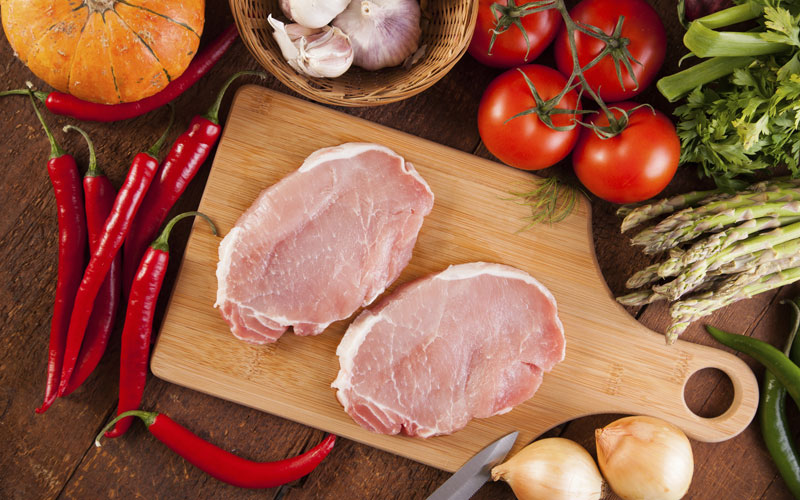
Raw Steak Meat
1. Start with your source of protein. Depending on your individual needs, this may range from 3-9 ounces of some type of animal product (meat or eggs). Adjust your portions of the recipes up or down as needed. As a very simple rule of thumb, each meal should have a protein item the size of your palm or slightly larger.
Veggies2. Next, add the vegetables. You will want to shoot for 1/2 to 1 pound of vegetables at most meals. Yes, this is a lot! You will receive abundant nutrients this way, and you’ll remain full longer. When you first modify your diet, take a few weeks to ease into this quantity of vegetables to allow your body to adapt. Occasionally, you may eat fruit or root vegetables, as well.
Sources of healthy fats
3. Finally, you’ll add some healthy fat. This will depend on your individual calorie needs, and on how much fat was in your protein source. With leaner meats, you will need to add more fat. This is your primary energy source, so don’t neglect this part! Your energy levels will be much more stable once your system gets used to running on fat for fuel. You will burn body fat more easily this way, as well.
Water poured into glass4. Drink water – not beverages containing calories. Try to make it the purest water you can find, not from a plastic bottle that leaches toxins, and not full of chlorine from your tap. Avoid even diet or sugar free varieties, as research shows that many of these drinks still cause problems with blood sugar levels, keeping your body in a fat storing state rather than a fat burning mode.
Good luck! Remember that preparation and planning ahead is the key to success on this plan.
Source:http://www.paleoplan.com/resources/basics-of-meal-construction/

The Paleo Diet Beginner’s Guide

Is eating like a caveman for you? Here’s the rationale behind the Paleo plan—and the seven basic rules you need to get started. 
Paleo. The caveman diet. Primal eating. From athletic trainers to holistic health professionals to diet book authors, it seems like everyone has something to say about why we should (or shouldn’t) take a lesson from ancient hunter-gatherers and get back to our dietary roots—which, Paleo enthusiasts will tell you, is the way humans were really designed to eat. And for every nutritionist or worst-diets list that slams the plan, there’s a research scientist, endurance athlete or weight loss winner who swears by it. What’s behind the hype?

The Paleo craze has its roots in a 1985 study by S. Boyd Eaton, MD, entitled “Paleolithic Nutrition,” published in the New England Journal of Medicine, and was further popularized by evolutionary medicine expert Loren Cordain, PhD, whose book The Paleo Diet, first published in 2002, is considered the seminal guide on the subject. Since then, guides to eating Paleo have proliferated, and while they may differ slightly from one another, they’re all based around a few common principles.
To give you a bit of an introduction to this prehistorically-minded nutrition plan, we broke the diet down into seven preliminary rules. Read on to learn the basics—and see if eating like a caveman could be right for you.
Source:
http://www.mensfitness.com/nutrition/what-to-eat/the-paleo-diet-beginner%E2%80%99s-guide

WHAT TO EAT ON THE PALEO DIET

While our books on The Paleo Diet provide much more detail on the foods you should and shouldn’t eat, here is a basic scheme of what to eat on The Paleo Diet:

EAT:

  • Grass-produced meats
  • Fish/seafood
  • Fresh fruits and veggies
  • Eggs
  • Nuts and seeds
  • Healthful oils (Olive, walnut, flaxseed, macadamia, avocado, coconut)

DON’T EAT:

  • Cereal grains
  • Legumes (including peanuts)
  • Dairy
  • Refined sugar
  • Potatoes
  • Processed foods
  • Salt
  • Refined vegetable oils

TIPS TO MAKE THE PALEO DIET A ROUTINE PART OF YOUR LIFESTYLE:

  • For breakfast, make an easy omelet. Sauté onion, peppers, mushrooms, and broccoli in olive oil; add omega-3-enriched or free-range eggs and diced turkey or chicken breast.
  • Paleo lunches are easy. At the beginning of the week, make a huge salad with anything you like. A good starting point can be mixed greens, spinach, radishes, bell peppers, cucumbers, carrots, avocadoes, walnuts, almonds and sliced apples or pears. Store the salad in a large sealable container. Each morning prepare a single serving from the large batch and then mix in meat (ground beef, beef slices, chicken, turkey, ground bison, pork chunks, etc.) or seafood of choice (salmon, shrimp, tuna, or any fresh fish or seafood). Toss with olive oil and lemon juice and you are set.
  • For dinner, try spaghetti squash as a substitute for any pasta recipe. Top with pesto, marinara and meatballs. Roasted beets and their greens make a great side dish for pork. Asparagus, broccoli, and spinach can be steamed quickly. Salmon, halibut, or other fresh fish filets grill well with accompanying foil packs full of cut veggies with olive oil and garlic.
  • Berries and other succulent fruits make a great dessert. Pre-cut carrot and celery sticks, sliced fruit, and pre-portioned raw nut/dried fruit mixes are easy snacks.
Daily Sample Straight from Dr. Cordain’s The Paleo Answer:
  • Breakfast: Omega-3 or free ranging eggs scrambled in olive oil with chopped parsley. Grapefruit, or any fresh fruit in season, herbal tea
  • Snack: Sliced lean beef, fresh apricots or seasonal fruit
  • Lunch: Caesar salad with chicken (olive oil and lemon dressing), herbal tea
  • Snack: Apple slices, raw walnuts
  • Dinner: Tomato and avocado slices; grilled skinless turkey breast; steamed broccoli, carrots, and artichoke; bowl of fresh blueberries, raisins, and almonds; one glass white wine or mineral water. (Clearly, wine would never have been available to our ancestors, but the 85:15 rule allows you to consume three non-Paleo meals per week.)
  • Source:
    http://thepaleodiet.com/what-to-eat-on-the-paleo-diet/

Weekly workout can lower risk of death for over 60s

Washington DC: It's time to start working out as a new study claims that even a little weekly physical activity curbs the risk of death among those above 60 years of age.

In the study, the researchers searched databases for studies which assessed risk of death according to weekly physical activity for those aged 60 and above. Physical activity was measured in Metabolic Equivalent of Task (MET) minutes, which express the amount of energy (calories) expended per minute of physical activity.

The study involved a total of 1,22, 417 participants, who were monitored for an average of around 10 years.
Pooled analysis of the data showed that clocking up less than 500 weekly MET minutes of physical activity was still associated with a 22 percent lowered risk of death compared with those who were inactive.
The more physical activity an individual engaged in, the greater the health benefit, reaching a 28 percent lower risk of death for those fulfilling the recommended weekly tally of MET minutes, while more than 1000 MET minutes was associated with a 35 percent lower risk.
The greatest benefit seemed to be among those who went from doing nothing or only a minimal amount of physical activity to doing more.
The data showed that a weekly tally of 250 MET minutes, which corresponds to 75 minutes of moderate to vigorous physical activity-or 15 minutes a day-was associated with health benefits, added to which the first 15 minutes of physical activity seemed to have the greatest impact.
The researchers suggested that this could be a reasonable target dose.
The researchers concluded that the target for physical activity in the current recommendations might be too high for older adults and may discourage some of them. The fact that any effort will be worthwhile may help convince those 60 percent of participants over 60 years of age, who do not practice any regular physical activity, to become active.


The study is published in the British Journal of Sports Medicine.

Exercise helps flow of mysterious hormone in your blood

New York: An exercise-induced hormone does exists in humans, say scientists, adding that this hormone, called irisin, circulates in the blood at nanogram levels and increases during exercise.
Irisin's discovery in 2012 was exciting because scientists had potentially found one reason why exercise keeps us healthy.

When irisin levels were increased in mice, their blood and metabolism improved.
But the presence of Irisin in humans was recently questioned by groups of scientists.
In new research, the authors show that human irisin is similar to the mouse hormone and that it circulates in the range previously reported.
Although irisin circulates at low levels (nanograms), this range is comparable to that observed for other important biological hormones such as insulin.
According to senior study author Bruce Spiegelman from Dana-Farber Cancer Institute and Harvard Medical School, that the confusion over irisin comes down to disagreement over how irisin protein is made in skeletal muscle cells and the detection limits of protocols.
He and co-author Steven Gygi turned to state-of-the-art techniques to show that the human hormone uses a rare signal ATA (start codon) to initiate the production of irisin.
Furthermore, the investigators developed a protocol, that does not rely on antibodies, to precisely measure how much irisin increases in people after exercise.
“The data is compelling and clearly demonstrates the existence of irisin in blood circulation,” said endocrinologist Francesco Celi from the Virginia Commonwealth University's medical center, who was not involved with the study.
“Importantly, the authors provide a precise and reproducible protocol to measure irisin,” he added.
Further studies are necessary to fully understand how the hormone works in humans, specifically how it relates to brown and beige fat tissue and energy use, the authors noted in a paper detailed in the journal Cell Metabolism.
Results from human studies are still mixed as to what kinds of exercise raise irisin, but data suggest that high-intensity training protocols are particularly effective.
Source:http://zeenews.india.com/news/health/fitness/exercise-helps-flow-of-mysterious-hormone-in-your-blood_1647058.html

Top Tips for Personal Branding

Making News:


More and more, knowledgeable individuals are developing themselves as brands. For exam- ple, well-known fitness professionals like Chalene Johnson and Cassey Ho have become the product they sell. Public relations expert Marsha Friedman believes that everyone should follow in these experts’ footsteps. “By branding yourself—making sure the world knows who you are and what expertise you have to offer—you not only set yourself apart from your competitors but you also open the door to new opportunities,” she explains.
Here are her top tips for developing your own brand:
  • Make sure your website represents you exactly the way you want to be seen.Your website is one of the best places to control your image. That could mean you want to be viewed as witty, as intellectual or as physically fit. It could mean you want the world to see you as an expert in a particular field. Maybe you want to convey an image of trust.
  • Maintain a strong social media presence. Twitter, Facebook, LinkedIn and other social media sites are invaluable tools for networking and for getting your message out quickly under your personal brand. Make sure you have a unified message that weaves through your website, your social media sites and anything else you use to promote yourself. Also keep design elements consistent from one platform to the next.
  • Keep your presence alive in traditional media, too, making yourself available for interviews. Media appearances act as a third-party endorsement, casting you as an authority in your field. This also needs constant cultivation. If you were quoted in a newspaper article last year, then you’re last year’s news. Even worse, if your competitors are quoted in articles today, they’ve become more relevant than you and they’re winning the personal-branding war.
  • Remember: Branding yourself is not a one-shot deal. One of the biggest misconceptions about branding is that people believe they can do just one or two things to promote themselves and then their work is done. Nothing could be further from the truth. Your branding effort never stops. It’s like trying to become physically fit. You wouldn’t go to the gym for just 1 week to get your dream body—nor would you expect that a good work- out 3 years ago would leave you set for life. Your personal branding effort works the same way. It’s ongoing.