Pages - Menu

Showing posts with label breakfast recipes paleo diet basics. Show all posts

BASICS OF MEAL CONSTRUCTION

There’s a fundamental blueprint for constructing your meals and snacks, and the reason for this is simple. Your body’s building blocks are protein, fat and carbohydrates. Of course we also need vitamins and minerals and other nutrients to survive and thrive, too. If you choose the right foods, you will be getting all of your protein, fat, carbs, AND nutrients all on one plate (or bowl) – no supplements necessary. Here’s how you do it:
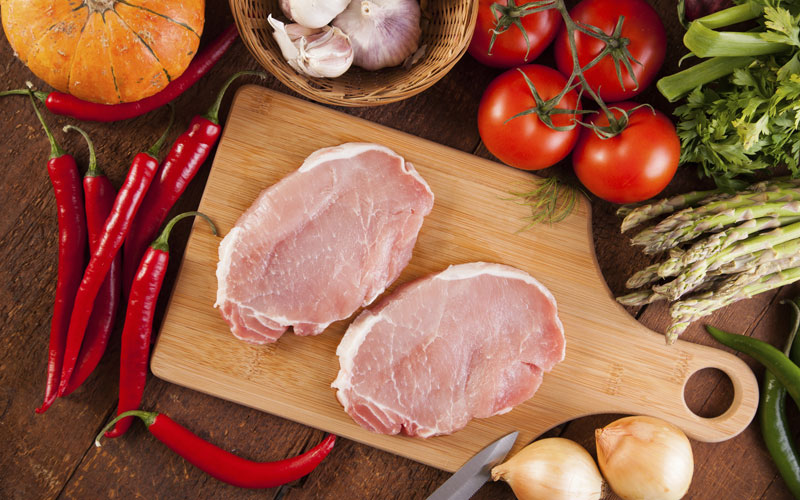
Raw Steak Meat
1. Start with your source of protein. Depending on your individual needs, this may range from 3-9 ounces of some type of animal product (meat or eggs). Adjust your portions of the recipes up or down as needed. As a very simple rule of thumb, each meal should have a protein item the size of your palm or slightly larger.
Veggies2. Next, add the vegetables. You will want to shoot for 1/2 to 1 pound of vegetables at most meals. Yes, this is a lot! You will receive abundant nutrients this way, and you’ll remain full longer. When you first modify your diet, take a few weeks to ease into this quantity of vegetables to allow your body to adapt. Occasionally, you may eat fruit or root vegetables, as well.
Sources of healthy fats
3. Finally, you’ll add some healthy fat. This will depend on your individual calorie needs, and on how much fat was in your protein source. With leaner meats, you will need to add more fat. This is your primary energy source, so don’t neglect this part! Your energy levels will be much more stable once your system gets used to running on fat for fuel. You will burn body fat more easily this way, as well.
Water poured into glass4. Drink water – not beverages containing calories. Try to make it the purest water you can find, not from a plastic bottle that leaches toxins, and not full of chlorine from your tap. Avoid even diet or sugar free varieties, as research shows that many of these drinks still cause problems with blood sugar levels, keeping your body in a fat storing state rather than a fat burning mode.
Good luck! Remember that preparation and planning ahead is the key to success on this plan.
Source:http://www.paleoplan.com/resources/basics-of-meal-construction/

WHAT TO EAT ON THE PALEO DIET

While our books on The Paleo Diet provide much more detail on the foods you should and shouldn’t eat, here is a basic scheme of what to eat on The Paleo Diet:

EAT:

  • Grass-produced meats
  • Fish/seafood
  • Fresh fruits and veggies
  • Eggs
  • Nuts and seeds
  • Healthful oils (Olive, walnut, flaxseed, macadamia, avocado, coconut)

DON’T EAT:

  • Cereal grains
  • Legumes (including peanuts)
  • Dairy
  • Refined sugar
  • Potatoes
  • Processed foods
  • Salt
  • Refined vegetable oils

TIPS TO MAKE THE PALEO DIET A ROUTINE PART OF YOUR LIFESTYLE:

  • For breakfast, make an easy omelet. Sauté onion, peppers, mushrooms, and broccoli in olive oil; add omega-3-enriched or free-range eggs and diced turkey or chicken breast.
  • Paleo lunches are easy. At the beginning of the week, make a huge salad with anything you like. A good starting point can be mixed greens, spinach, radishes, bell peppers, cucumbers, carrots, avocadoes, walnuts, almonds and sliced apples or pears. Store the salad in a large sealable container. Each morning prepare a single serving from the large batch and then mix in meat (ground beef, beef slices, chicken, turkey, ground bison, pork chunks, etc.) or seafood of choice (salmon, shrimp, tuna, or any fresh fish or seafood). Toss with olive oil and lemon juice and you are set.
  • For dinner, try spaghetti squash as a substitute for any pasta recipe. Top with pesto, marinara and meatballs. Roasted beets and their greens make a great side dish for pork. Asparagus, broccoli, and spinach can be steamed quickly. Salmon, halibut, or other fresh fish filets grill well with accompanying foil packs full of cut veggies with olive oil and garlic.
  • Berries and other succulent fruits make a great dessert. Pre-cut carrot and celery sticks, sliced fruit, and pre-portioned raw nut/dried fruit mixes are easy snacks.
Daily Sample Straight from Dr. Cordain’s The Paleo Answer:
  • Breakfast: Omega-3 or free ranging eggs scrambled in olive oil with chopped parsley. Grapefruit, or any fresh fruit in season, herbal tea
  • Snack: Sliced lean beef, fresh apricots or seasonal fruit
  • Lunch: Caesar salad with chicken (olive oil and lemon dressing), herbal tea
  • Snack: Apple slices, raw walnuts
  • Dinner: Tomato and avocado slices; grilled skinless turkey breast; steamed broccoli, carrots, and artichoke; bowl of fresh blueberries, raisins, and almonds; one glass white wine or mineral water. (Clearly, wine would never have been available to our ancestors, but the 85:15 rule allows you to consume three non-Paleo meals per week.)
  • Source:
    http://thepaleodiet.com/what-to-eat-on-the-paleo-diet/

Top Tips for Personal Branding

Making News:


More and more, knowledgeable individuals are developing themselves as brands. For exam- ple, well-known fitness professionals like Chalene Johnson and Cassey Ho have become the product they sell. Public relations expert Marsha Friedman believes that everyone should follow in these experts’ footsteps. “By branding yourself—making sure the world knows who you are and what expertise you have to offer—you not only set yourself apart from your competitors but you also open the door to new opportunities,” she explains.
Here are her top tips for developing your own brand:
  • Make sure your website represents you exactly the way you want to be seen.Your website is one of the best places to control your image. That could mean you want to be viewed as witty, as intellectual or as physically fit. It could mean you want the world to see you as an expert in a particular field. Maybe you want to convey an image of trust.
  • Maintain a strong social media presence. Twitter, Facebook, LinkedIn and other social media sites are invaluable tools for networking and for getting your message out quickly under your personal brand. Make sure you have a unified message that weaves through your website, your social media sites and anything else you use to promote yourself. Also keep design elements consistent from one platform to the next.
  • Keep your presence alive in traditional media, too, making yourself available for interviews. Media appearances act as a third-party endorsement, casting you as an authority in your field. This also needs constant cultivation. If you were quoted in a newspaper article last year, then you’re last year’s news. Even worse, if your competitors are quoted in articles today, they’ve become more relevant than you and they’re winning the personal-branding war.
  • Remember: Branding yourself is not a one-shot deal. One of the biggest misconceptions about branding is that people believe they can do just one or two things to promote themselves and then their work is done. Nothing could be further from the truth. Your branding effort never stops. It’s like trying to become physically fit. You wouldn’t go to the gym for just 1 week to get your dream body—nor would you expect that a good work- out 3 years ago would leave you set for life. Your personal branding effort works the same way. It’s ongoing.

Paleo Scotch Eggs – Guest Recipe

If you haven’t read our Paleo Journeys interview with Emma of Paleo with Mrs P, check it out now. Diagnosed with diabetes just before her eighteenth birthday, Emma shares her story of how a paleo diet calmed her symptoms, as well as making her feel happier and healthier. Her website Paleo with Mrs P is dedicated to simple, healthy, nutritious recipes which are free from dairy, gluten, grains and refined sugar. Today she is sharing her recipe for Paleo Scotch Eggs – how good do they look!


Simple Paleo Scotch Eggs


Author:
Emma of Paleo with Mrs P
Serves: 4
Prep time: 30 mins
Cook time: 15 mins
Total time: 45 mins


These scotch eggs are so simple to make and are meaty, filling and flavoursome. They would also be amazing cold, for a picnic or even in a lunch box. The ones I made were huge, so you could easily halve the recipe to make four smaller ones.

Ingredients
  • 6 sausages (de-skinned, 100% organic meat – if possible)
  • 1 tsp paprika
  • 1 pinch salt
  • 1 tsp sage
  • 1 pinch pepper
  • 2 tbsp ground almonds (I use the almond meal left over from my almond milk recipe)
  • 100g mixed seeds
  • 6 large eggs + 1 egg (whisked in a separate bowl)
Instructions
  1. Turn oven on to 180°c
  2. Place 4 large eggs in to boiling water for 6 minutes (medium eggs: 5 minutes, small eggs: 4 minutes). Take off heat and place in to ice-cold water whilst you carry on with the rest of the preparations
  3. In to a blender place the almond meal, pinch of salt and mixed seeds, blitz until coarse and crumbly, place aside
  4. In to the blender place all sausage meat (make sure to de-skin beforehand), spices, salt and pepper, blend until fully combined and sticky
  5. Peel the cold eggs, gently (as they will still be soft-boiled)
  6. Now break sausage mixture in to 6 balls. Using the palm of your hand create a “cup”, flat patty shape. Place one egg into the middle and work the sausage mixture around it making sure to fully seal all the sides
  7. Now dip the ball in to the egg mix (1 whisked egg) and fully cover smoothing all the sides (this is how your meat and egg will stay bound)
  8. Roll the ball straight in to the mixed seeds / almond mixture
  9. In to a shallow frying pan over high heat heat up about ½ cup olive oil and place scotch egg in to the oil. Brown each side for around 1-2 minutes until golden brown, then place on to a baking sheet and bake for 5 – 6 minutes
  10. Serve straight away with homemade chutney, rocket and avocado

24 Healthy Shrimp Recipes


Fresh or frozen, shrimp is America's favorite kind of seafood. It's low in saturated fat, packed with protein, and a good source of iron, zinc, vitamin B12 and selenium. Though sometimes a simple shrimp cocktail is all you’re looking for, these 24 recipes offer delicious and healthy ways to cook up shrimp for lunch, dinner, or as a healthy snack. 


Source http://www.health.com/health/gallery/0,,20729248,00.html